
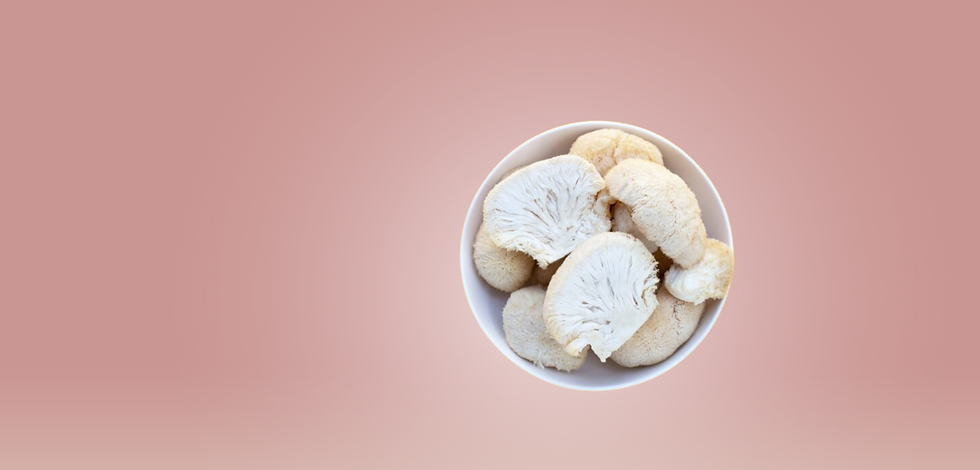
LION'S MAINE MUSHROOM
Mushroom, scientifically known as Hericium erinaceus, is a striking, white, shaggy mushroom that resembles a lion’s mane as it grows—hence its name

What is Lion’s Mane?
Lion’s Mane mushroom, scientifically known as Hericium erinaceus, is a striking, white, shaggy mushroom that resembles a lion’s mane as it grows—hence its name. Native to North America, Europe, and Asia, this mushroom has long been prized in Traditional Chinese Medicine and Japanese herbalism for its powerful effects on the brain, nerves, and overall vitality.
.jpeg)


Superfood Qualities of Lion’s Mane
Lion’s Mane mushroom (Hericium erinaceus) is a unique and visually striking fungus known for its cascading, white spines that resemble a lion’s mane. This mushroom has been used for centuries in traditional medicine across China, Japan, and other parts of Asia. Revered for its cognitive and neurological benefits, Lion’s Mane was often consumed by Buddhist monks to enhance mental clarity during meditation. In ancient Chinese herbalism, it was considered a tonic for the “five internal organs” and believed to support overall vitality.
Today, Lion’s Mane is recognized as a powerful nootropic superfood—a natural substance that can boost brain function. It contains two key compounds, hericenones and erinacines, which are known to stimulate the production of Nerve Growth Factor (NGF). NGF is essential for the growth, repair, and maintenance of neurons, making Lion’s Mane especially valuable for improving memory, focus, and cognitive performance. Emerging research also points to its potential in protecting against neurodegenerative conditions like Alzheimer’s and Parkinson’s disease.
In addition to its brain-boosting effects, Lion’s Mane may help support emotional wellness. Studies suggest it can help reduce symptoms of anxiety and depression by supporting brain plasticity and reducing inflammation in the nervous system. This makes it a gentle, natural aid for mood balance and mental resilience.
Lion’s Mane also plays a supportive role in immune health, thanks to its high content of beta-glucans—polysaccharides known for modulating immune responses. It may also benefit the digestive system, helping to repair gut lining, calm inflammation, and support a healthy microbiome. Its antioxidant and anti-inflammatory properties help protect the body from cellular damage and chronic inflammation, making it a powerful ally for long-term health and wellness.
Commercially, Lion’s Mane is cultivated in controlled indoor environments, typically grown on organic hardwood sawdust or sterilized grain substrates. Under carefully monitored conditions of high humidity, fresh air, and cooler temperatures, the mushroom forms dense white clusters that resemble icicles or pom-poms. This method ensures a clean, high-quality crop that preserves the mushroom’s active compounds.
Nutritionally, Lion’s Mane is rich in B vitamins, minerals like potassium and zinc, as well as fiber and protein. While it’s low in calories, its unique bioactive profile gives it tremendous functional value. It’s available in many convenient formats including gummies, powders, capsules, and tinctures, and can even be enjoyed fresh as a gourmet ingredient with a seafood-like flavor.
In summary, Lion’s Mane is more than just a fascinating fungus—it’s a natural brain and body enhancer. Whether you're looking to sharpen your focus, support your nervous system, improve mood, or protect against aging, Lion’s Mane offers a gentle but effective path to wellness, backed by both tradition and modern science.
